

REVIEW · WALKING TOURS
Pies & Pickaxes: A Historic Walking Tour of Julian, CA
Pie first, then pickaxes.
This self-guided historic walking tour ties Julian’s mining-era stories to the buildings you can actually see, so you get place-based context fast. I like the short 1 to 2 hour pace that works on a busy day, and I also like how the stops focus on named people and specific objects, not vague town facts.
The main thing to plan for is time at each stop is brief, and one stop includes a short hill climb. If you like to linger for photos or want extra museum time, budget a little extra after the tour ends.
Key highlights you will feel right away

- Drue Bailey’s prank story at the Bailey House, tied to Julian’s founder lore
- Bird’s-eye views from Julian Cemetery as you climb to see town from above
- Apple orchard transformation behind the pie shop stop, with a tasty chance to snack
- A real surveying object at the Wilcox Building, linked to Porter Perrin Wheaton’s county road work
- Albert Robinson and Margaret’s Gold Rush Hotel, including its Southern California claim to fame
- Old brick and concrete buildings, including Miners Diner and the Julian Jail replacement
A short self-guided walk that teaches Julian fast

Pies & Pickaxes is the kind of tour that helps you get your bearings quickly. You move along Main Street and a few nearby stops, and the app gives you story after story tied to actual buildings. For $7.99 per person and a typical runtime of 1 to 2 hours, it is a solid way to turn a simple morning stroll into a real understanding of what built Julian.
I also like the “small details, big meaning” approach. Instead of only pointing out age and architecture, the tour links people to places, like a founder’s pranks, an immigrant who started a grocery, and a survey wheelbarrow tied to county roads. Those specifics make the town feel less like a postcard and more like a set of real decisions made by real residents.
One more reason I think it works: the stops are timed so you do not lose the plot. Each main stop is around 5 minutes, so the experience stays light, even when the stories get interesting. You are not expected to read every plaque. You get just enough to spark curiosity, then you can choose what to revisit when the tour is done.
From 2315 Main St to Julian Pioneer Museum, the route makes sense
The tour begins at 2315 Main St, Julian, CA 92036. You end at Julian Museum and Pioneer County Park, 2811 Washington St, Julian, CA 92036, which is just around the corner from where you started, so you do not have to figure out a complicated second location.
The hours listed are 5:30 AM to 9:00 PM, Monday through Sunday. That matters because Julian can be a day-trip town, and having a wide window means you can match the walk to your schedule, whether you want a calmer early start or a late-day stroll.
This is also a private tour/activity. Only your group participates, which makes it easier if you are traveling with kids, friends, or family who prefer not to share the story moment with strangers. One more practical point: the tour does not include transportation, so you will want to plan how you will get to Main Street.
Finally, think about phone battery and comfort. A smartphone is not included, and you will be using your own device with the app and tour content. If you want fewer hassles, download the content ahead of time, especially if signal is spotty.
Bailey House and the founder story you actually remember
Stop one is Bailey House, where you see the home of Drue Bailey, the founder of Julian. You also hear a funny story about one of the pranks he pulled in town. That blend of “who mattered” and “what kind of character the town had” is why this tour feels personal.
What makes this stop work is that it sets the tone. You are not starting with a random building. You start with the people who put Julian on the map, and then the tour keeps returning to people and their choices at each next stop.
Drawback to consider: it is brief. The point is to give you a quick anchor, not to slow down and go deep.
Julian Cemetery for views, names, and the town’s early residents

Next comes Julian Cemetery. The key feature here is a short climb for a bird’s-eye view of town, plus a chance to see the graves of some of Julian’s earliest residents.
This stop changes the tempo in a good way. Even if the tour is only minutes at each location, getting a higher vantage point helps your brain connect the dots. You see the layout of Main Street and the surrounding area, and suddenly the rest of the walking stops feel more grounded.
One practical note: the cemetery hill means you will want comfortable shoes. If you are with someone who has mobility limits, plan for a slower pace and be ready to pause as needed.
Julian Pie Company, mining-to-orchard context, plus a real snack option

At Julian Pie Company, the tour connects the early residents to the shift from mining focus to apple orchards. Then you get a very Julian moment: stop in for a slice of apple pie or an apple cider donut.
This is where the tour earns its playful name. The stories are not only historical trivia. They explain why Julian can be both a former mining town and a place famous for apples, and then you get to try the local food that comes out of that change.
Because you can actually eat here, it also gives you a natural break. If you start early in the morning, this can be a first light snack before you keep walking. If you arrive later, it still works as an energy stop.
Julian Market and Deli, the Jacoby building and daily work

The tour then moves to a historic mercantile building known as the Jacoby building, in front of Julian Market & Deli. Here you hear how one early resident made a living in Julian.
This stop is short, but it is one of the most useful for understanding how towns actually function. Mining towns do not survive on mining forever. People still needed supplies, goods, and day-to-day commerce. Mercantile buildings like this help you see Julian as a community, not just an idea.
If you like architecture, keep your eyes up at street level details too. Even when you are only there for a few minutes, you can learn to spot what makes these old buildings different from modern facades.
Miners Diner, brick in the backcountry

Next is Miner’s Diner, where you see another historic building on Julian’s Main Street. The standout detail is that it was the first in the backcountry to be built of brick.
That “first brick in the backcountry” angle matters. It suggests a shift in how stable the area had become and how people chose to build. It also makes you think about what it takes for a place to go from temporary and hard to settle into something more permanent.
This stop is best for quick pattern recognition. You will likely start noticing how frequently these older town structures show up on one street, and how the stories explain why.
Jack’s Grocery and Frank De Luca’s immigrant business story

At Jack’s Grocery, the tour highlights the story of an Italian immigrant named Frank De Luca, who moved to Julian and started a grocery store.
This is a classic but meaningful kind of historical tour moment. It is not only about big events. It is about who kept families fed and supplied. Grocery stores sound ordinary until you connect them to migration and survival.
If you have any curiosity about how immigrant communities shaped small towns, this stop is one you will probably remember later. It is also an easy mental transition from the mining-era story into everyday life.
Wilcox Building and the wheelbarrow survey detail
The Wilcox Building stop is where the tour gets delightfully specific. You see the wheelbarrow that Porter Perrin Wheaton used to survey 2328 miles of county roads in 1900.
I love this kind of stop because it takes a huge-sounding number and attaches it to something physical. A wheelbarrow is an object you can picture. It makes road-building feel like human work, not abstract progress.
This also gives you a sense of how infrastructure grows. County roads do not appear by magic. Someone surveys, plans, and measures. This stop gives you that glimpse without dragging you through a lecture.
Julian Gold Rush Hotel, Albert Robinson and Margaret’s legacy
At Julian Gold Rush Hotel, you check out the oldest continually-operating hotel in Southern California. You also hear about Albert Robinson, an ex-Missouri slave, and his wife Margaret, who started it.
This is one of the stops that adds emotional weight. It is not only a claim about age and continuity. It connects the building to people and to the long arc of a community finding a way forward.
Because the tour keeps things to around a few minutes, you might want to return after the walking loop if you want more time with the hotel context. But even within the short stop, it gives you a meaningful thread to carry into the next story.
Julian Jail, from wooden escape problems to concrete replacement
Next is Julian Jail, where you see a small concrete jail house. The tour explains that it replaced a smaller wooden jail that could not seem to prevent detainees from escaping.
This stop is quick, but the detail is memorable. It is an everyday-life consequence of running a town that had rules and enforcement needs. It also adds variety to the tour, since the building types are not all commercial or residential.
If you are a “why did they build it like that” person, this is a good one to think about. The tour nudges you to imagine the practical fixes towns made when old systems failed.
The old schoolhouse and why the Pioneer Museum is worth extra time
The route also includes an old schoolhouse that was relocated and restored by the Julian Historical Society. Then you wrap at the Julian Pioneer Museum, which showcases artifacts and exhibits about the town’s early residents.
Even though the walking portion keeps moving, the museum stop is a natural place to slow down. If the tour whets your interest, the museum gives you a place to follow that interest at your own speed, without strict stop timers.
I like using the walking tour as a sampler. You get names, buildings, and a few standout objects, then you can choose whether you want to spend more time reading or just enjoy the overall vibe of the museum space.
Price and value, why $7.99 is a good deal for Julian
At $7.99 per person, Pies & Pickaxes is priced for people who want something more than a casual stroll but do not want to pay for a full guided day. The value comes from a few key things working together.
First, the tour content is delivered through an app and tour download, and you get flexible usage with unlimited access within 30 days. That means if you come back to Julian later, or you want to re-walk a section, you are not starting from zero.
Second, stop admissions are listed as ticket free at the key locations on the route. That matters because it lowers the “gotcha cost” feeling and lets you spend money only on optional food or extra time in town.
Third, the runtime is short. For people on a day trip, time is usually the limiting factor, not money. A 1 to 2 hour tour can fit between meals, between errands, or before you commit to a longer museum visit.
If you already know Julian well, you might still enjoy it for the specific names and object details. If it is your first time, it works even better as a fast orientation.
Who this tour suits best, and who should add time
This tour fits best if you want a self-guided experience that helps you understand what you are seeing while staying light on your feet. The route is manageable for most travelers, but the cemetery hill is the main reason you should wear comfortable shoes and plan for a short climb.
It is also a good fit for groups because it is private, meaning only your group participates. Families can benefit too, since children under 11 are free. If you are traveling with a service animal, the tour allows service animals.
Where you might want to adjust your plan: the tour is built around quick stop moments. If you love deep museum time, or if you want longer photo sessions, schedule extra time after the tour ends at the Pioneer Museum and take your time there.
Should you book Pies & Pickaxes?
If you are visiting Julian and want to turn a main street walk into something you will remember, I think this is an easy yes. For $7.99, you get a structured path through the town’s key historic sites, with specific stories tied to Drue Bailey, Frank De Luca, Porter Perrin Wheaton, and Albert Robinson and Margaret. Add the quick chance to grab pie or an apple cider donut, and you have a fun mix of food and context without eating your whole day.
If you hate walking, dislike phone-based self tours, or prefer long guided museum-style pacing, then this might feel too short. In that case, you could still visit the sites on your own, but you would miss the built-in story threads that make the buildings connect.
In most cases though, this is a smart value move. It helps you understand Julian quickly, then hands you the choice of what to linger on afterward.
FAQ
How long is the Pies & Pickaxes walking tour?
The tour runs about 1 to 2 hours.
How much does the tour cost?
It costs $7.99 per person.
What language is the tour offered in?
The tour is offered in English.
Where does the tour start and where does it end?
It starts at 2315 Main St, Julian, CA 92036 and ends at Julian Museum and Pioneer County Park, 2811 Washington St, Julian, CA 92036.
Do you pay admission at the stops?
The stops listed on the tour show admission ticket free, so there is no separate admission ticket noted for those points.
Do I need a smartphone?
Yes. A smartphone is not included, and the tour uses an app and tour download.
Can I download the tour content?
Yes. The experience includes an app & tour download, and downloadable content can help you save data. It also notes unlimited access within 30 days.
Is it a private tour, and are service animals allowed?
Yes. It is a private tour/activity, so only your group participates. Service animals are allowed, and children under 11 are free.
What are the opening hours listed for the tour?
The listed hours are Monday to Sunday, 5:30 AM to 9:00 PM.
What is the cancellation policy?
You can cancel for free up to 24 hours in advance for a full refund. If you cancel less than 24 hours before the start time, the amount paid is not refunded.
San Diego on Foot: More Routes
- Intro to Mexico Walking Tour: Tijuana Day Trip from San Diego★ 4.5 · 616 reviews
- Tijuana Local Walking Tour from San Diego★ 4.5 · 283 reviews
- Tequila, Tacos & Tombstones: Old Town Food & Drink Walking Tour★ 4.5 · 225 reviews
- San Diego: Gaslamp Quarter Food & Drink Walking Tour★ 4.7 · 154 reviews
- San Diego Gaslamp Downtown Walking Ghost Tour★ 4.5 · 133 reviews
More Tours in San Diego
- San Diego Hop On Hop Off Trolley Tour★ 4.5 · 2,523 reviews
- San Diego: Hop-on Hop-off Narrated Trolley Tour★ 4.7 · 1,323 reviews
- San Diego Seal Tour★ 4.5 · 1,226 reviews
- Gaslamp Quarter Food and Drink Tour: Brothels, Bites & Booze★ 4.5 · 786 reviews
- San Diego: SEAL City Tour by Amphibious Bus★ 4.7 · 651 reviews
More Tour Reviews in San Diego
- San Diego Zoo 1-Day Pass: Any Day Ticket★ 4.5 · 4,248 reviews
- San Diego Harbor Cruise★ 4.5 · 2,980 reviews
- San Diego Hop On Hop Off Trolley Tour★ 4.5 · 2,523 reviews
- San Diego Whale Watching Cruise★ 5.0 · 2,317 reviews
- USS Midway Museum Admission: Valid Any Date★ 5.0 · 2,165 reviews
Walking Tours, compared.
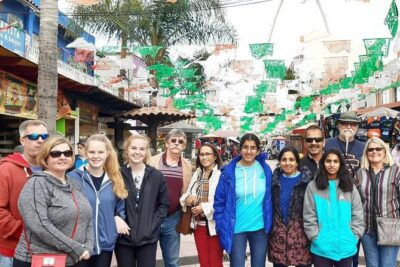 ★ 4.5Intro to Mexico Walking Tour: Tijuana Day Trip from San DiegoFrom $73616 reviews
 ★ 4.5Tijuana Local Walking Tour from San DiegoFrom $53283 reviews
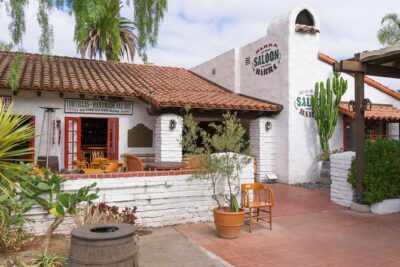 ★ 4.5Tequila, Tacos & Tombstones: Old Town Food & Drink Walking TourFrom $94225 reviews
 ★ 4.7Gaslamp Quarter Food & Drink Walking TourFrom $94154 reviews
 ★ 4.5San Diego Gaslamp Downtown Walking Ghost TourFrom $42133 reviews
 ★ 5.0Historic La Jolla Walking TourFrom $70124 reviews
 ★ 4.5Ghosts of San Diego Walking TourFrom $2994 reviews
 ★ 4.8Old Town Tequila and Tacos Walking Food TourFrom $8971 reviews
Related categories